


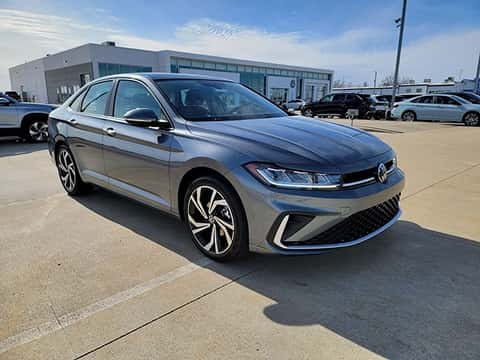
2026 Volkswagen Jetta vs. 2026 Toyota Corolla
Compact sedans balance practicality with affordability, and the 2026 Volkswagen Jetta vs. 2026 Toyota Corolla comparison reveals two distinct approaches. The Jetta emphasizes European driving dynamics and interior refinement, while the Corolla focuses on Toyota’s reputation for reliability and efficiency.
This comparison examines pricing, performance, space, and ownership costs to help Southern Illinois shoppers decide which sedan fits their needs.
Pricing and Trim Lineups: What Each Sedan Offers
The 2026 Corolla starts at $22,925, positioning it slightly below the Jetta’s $23,995 base price. But here’s the thing: the Jetta includes features right out of the gate that Toyota saves for higher trims. We’re talking heated front seats and a solid infotainment system.
Volkswagen keeps things straightforward with four trim levels, each building on turbocharged power and thoughtful interior touches. Toyota spreads the Corolla across more configurations, including hybrid variants that let you dial in exactly the right balance between features and budget.
For transparent pricing without hidden fees, Volkswagen of Marion at 4403 W DeYoung St provides clear information on what each Jetta trim delivers. Check current new vehicle specials and explore financing options tailored to your budget.
Fuel Economy for Your Daily Commute
EPA fuel economy figures reveal efficiency differences between these sedans:
| Model | City | Highway | Combined |
| Corolla (LE) | 32 MPG | 41 MPG | 35 MPG |
| Corolla (SE/XSE) | 32 MPG | 41 MPG | 34 MPG |
| Jetta (S) | 29 MPG | 40 MPG | 34 MPG |
| Jetta (Sport/SE/SEL) | 29 MPG | 40 MPG | 33 MPG |
The Corolla edges ahead in city driving, while the Jetta nearly matches it on highways. What’s impressive is how the Jetta’s turbocharged engine delivers this efficiency without sacrificing power for highway merging. Toyota’s hybrid Corolla option dramatically improves mileage for high-mileage commuters, though it bumps up the upfront cost.
Temperature extremes affect both sedans. Southern Illinois winters aren’t as brutal as northern climates, so you won’t see the dramatic efficiency drops some regions experience.
Power and Driving Feel: European Refinement vs. Proven Simplicity
Performance specifications show clear differences in driving character:
| Specification | 2026 Corolla | 2026 Jetta |
| Engine | 2.0L 4-Cylinder | 1.5L Turbocharged 4-Cylinder |
| Horsepower | 169 hp @ 6,600 rpm | 158 hp @ 5,500 rpm |
| Torque | 151 lb-ft @ 4,400 rpm | 184 lb-ft @ 1,750 rpm |
| 0–60 Time | 8.3 seconds | 7.1 seconds |
| Transmission | CVT | 8-Speed Automatic |
The Jetta’s turbo engine produces substantially more low-end torque, delivering quicker acceleration (7.1 seconds vs. 8.3 seconds to 60 mph) and more confident passing power. The Corolla’s naturally aspirated engine prioritizes smoothness and simplicity.
Steering feedback creates another clear distinction. The Jetta communicates more about road conditions, giving you better control through curves. According to Car and Driver, the Jetta offers a “nice blend of ride quality and handling,” while the Corolla shows “bland handling” and feels “unrefined.”
Volkswagen pairs the Jetta’s turbo with an eight-speed automatic that shifts smoothly. Toyota’s CVT operates efficiently but sometimes feels less engaging under hard acceleration.
Ride Comfort and Cabin Quietness
The Jetta’s European-tuned suspension absorbs bumps with controlled, planted motion that keeps occupants comfortable without excessive body roll. The Corolla prioritizes softer initial impact over irregularities, which works well for highway cruising but feels less controlled over consecutive bumps.
Here’s where the Jetta really shines: Volkswagen employs thicker door seals and more sound-deadening material, creating vault-like quietness at highway speeds. The Corolla achieves respectable quietness, though road noise filters through more noticeably on coarse pavement.
Engine noise intrudes less in the Jetta during normal driving thanks to the turbo’s lower-rpm power delivery. The Corolla’s engine works harder and sounds more labored during acceleration, particularly with the CVT holding revs high.
The Jetta’s standard seats offer better bolstering and support for various body types. The Corolla’s seats lean softer and flatter in base trims.
Interior Space: Rear-Seat Room and Trunk Capacity
Interior dimensions reveal the Jetta’s space advantage:
| Dimension | 2026 Corolla | 2026 Jetta |
| Passenger Volume | 88.6 cu ft | 94.7 cu ft |
| Rear Legroom | 34.8 in | 37.4 in |
| Cargo Volume | 13.1 cu ft | 14.1 cu ft |
| Overall Length | 182.5 in | 186.5 in |
The Jetta provides 2.6 inches more rear legroom. That might not sound like much, but it makes a real difference for families or anyone regularly carrying adult passengers. The Jetta also delivers a more useful trunk with a wide opening and square shape that simplifies loading luggage, groceries, or camping gear.
Headroom favors the Corolla slightly up front, particularly for taller drivers. Both sedans accommodate six-footers in front seats without issue.
The Jetta feels more spacious across the front seats, reducing elbow-bumping with passengers. Rear-seat passengers enjoy more personal space in the Jetta, making three-across seating less cramped. View the 2026 Jetta inventory to experience this space advantage firsthand.
Infotainment and Smartphone Integration
Both sedans deliver smartphone integration through Apple CarPlay and Android Auto. Volkswagen’s infotainment interface responds quickly to inputs and organizes menus logically. Screen size varies by trim, with higher-end models offering larger touchscreens.
Physical controls remain crucial for climate and volume adjustments. The Jetta strikes a smart balance, keeping tactile buttons and knobs for key controls while routing secondary functions through the touchscreen. The Corolla takes a similar approach, though control placement proves slightly less intuitive.
Voice recognition quality influences actual usage. Both systems understand natural speech reasonably well, though the Jetta’s system handles complex requests marginally better. Premium audio systems in higher trims deliver noticeable improvements in clarity and depth for both sedans.
Safety and Driver-Assist Features by Trim
Standard driver-assist features include automatic emergency braking, lane-keeping assist, and adaptive cruise control across most trim levels. Safety equipment comparison:
Corolla Standard: Forward Collision Warning, Automatic Braking, Lane Keep Assist, Backup Camera, Rear Cross-Traffic Alert, Blind Spot Monitoring, Side/Curtain/Knee Airbags
Jetta Standard: Adaptive Cruise Control with Stop and Go, Travel Assist (semi-automated driving), Front Assist with Pedestrian Monitoring, Lane Assist, Emergency Assist, Active Blind Spot Monitor, Rear Traffic Alert
The Jetta achieves a 5-Star Overall NHTSA Rating. Volkswagen’s IQ.DRIVE suite provides intuitive assistance that works unobtrusively. Lane centering feels confident and requires minimal corrections. Adaptive cruise maintains smooth following distances with natural braking and acceleration.
Toyota Safety Sense delivers similar core functionality with slightly more conservative tuning. Lane-keeping assistance proves effective but requires more driver input. Both sedans offer blind-spot monitoring and rear cross-traffic alert in higher trims.
Ownership: Warranty, Maintenance, and Resale Confidence
Five-year ownership cost estimates show minimal differences:
| Category | 2026 Corolla | 2026 Jetta |
| Cost Per Mile | $0.39 | $0.40 |
| Depreciation | $8,417 | $9,691 |
| Fuel Costs | $6,696 | $6,883 |
Warranty coverage differs between brands:
- Corolla: 5 years/60,000 miles powertrain; 5 years corrosion (no mileage limit)
- Jetta: 4 years/50,000 miles powertrain; 100,000-mile corrosion warranty
Maintenance costs run surprisingly close over the first several years. Both need regular oil changes, tire rotations, and periodic inspections. The Jetta’s turbocharged engine doesn’t demand dramatically higher maintenance than the Corolla’s conventional powerplants.
Service convenience matters for ownership satisfaction. Having a local dealer like Volkswagen of Marion means routine service fits easily into your schedule. The service department operates Monday through Friday from 7:30 AM to 5:30 PM, with Saturday hours from 8 AM to 12 PM. Call 618-249-3834 to schedule service.
Which Compact Sedan Fits Your Life Best?
Key Comparison Summary
| Category | 2026 Corolla | 2026 Jetta | Advantage |
| Starting MSRP | $22,925 | $23,995 | Corolla |
| Combined MPG | 34-35 | 33-34 | Corolla |
| 0-60 Time | 8.3 sec | 7.1 sec | Jetta |
| Rear Legroom | 34.8 in | 37.4 in | Jetta |
| Cargo Space | 13.1 cu ft | 14.1 cu ft | Jetta |
| Powertrain Warranty | 5yr/60K | 4yr/50K | Corolla |
Who Should Choose Each Sedan
Choose the Jetta if you value driving engagement, interior refinement, and powerful standard performance. The Volkswagen delivers a premium feel above its price point, with thoughtful touches and confident dynamics. Rear-seat passengers appreciate the extra legroom, and the responsive turbocharged power makes highway driving genuinely pleasant.
The Corolla makes more sense when maximum fuel efficiency, lowest upfront cost, and Toyota’s proven dependability reputation top your list. The hybrid option delivers unmatched efficiency for high-mileage drivers, while conventional models provide straightforward, fuss-free transportation.
Best Match by Needs
Daily commuter: The Corolla Hybrid has the fuel efficiency edge for high-mileage drivers, but if you spend a lot of time on highways or in stop-and-go traffic, the Jetta’s turbocharged engine and more comfortable ride make the daily grind noticeably more enjoyable. Drivers who value the experience behind the wheel as much as the cost per mile will find the Jetta worth the small efficiency trade-off.
First-time buyer: The Jetta is a strong choice here. Its starting price is only modestly higher than the Corolla, and it delivers a level of interior quality and driving confidence that feels well above its price point. For a first car that won’t feel like a compromise, the Jetta punches above its weight.
Long-term keeper: The Corolla holds the advantage with a longer powertrain warranty and Toyota’s well-established reputation for longevity past 100,000 miles. Buyers focused purely on minimizing long-term ownership costs will feel more comfortable here.
Experience the Difference at Volkswagen of Marion
Southern Illinois drivers face conditions both sedans handle well, but test driving reveals differences specs alone can’t capture. The Jetta’s steering weight, seat comfort, and general refinement either resonate with your preferences or they don’t.
Browse our current Jetta inventory online to see available trims, colors, and pricing before you visit. When you’re ready to get behind the wheel, schedule a test drive at our Marion dealership and feel firsthand what separates the Jetta’s European driving character from the Corolla’s proven formula.
Our team at 4403 W DeYoung St is here to walk you through trim options, current incentives, and financing that fits your budget, all in a pressure-free environment. Contact us online or call 618-249-3841 to get started today.
0 comment(s) so far on 2026 Volkswagen Jetta vs. 2026 Toyota Corolla