


Signs Your VW Needs an Ignition Coil Replacement
If your Volkswagen has been running rough lately, idling unevenly, or feeling sluggish on the highway, it’s natural to feel a little anxious. Something is clearly off, but you might not know where to start. The good news is that many of these symptoms point to a single, diagnosable cause: a failing ignition coil. Catching it early protects both your engine and your budget.
If anything in this article sounds familiar, we encourage you to schedule a service appointment with us so we can identify exactly what’s going on before it gets worse.
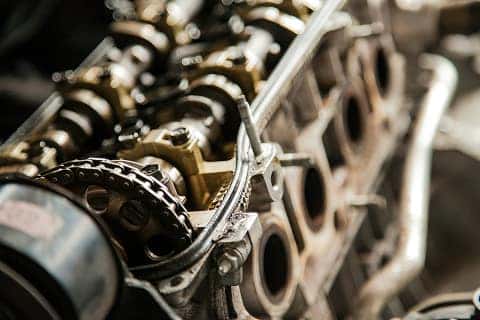
What Ignition Coils Do and Why They Matter for Your VW
Your VW’s ignition coil plays a surprisingly simple but critical role. It takes the low-voltage power from your car’s battery and converts it into the high-voltage spark needed to ignite the air-fuel mixture inside each cylinder. Without that charge delivered at the right moment, combustion either fails completely or happens unevenly.
Volkswagen engineers many of their vehicles with a coil-on-plug system, meaning each cylinder has its own dedicated coil. This design provides maximum spark energy and efficiency, which contributes to smooth performance. When one of those coils begins to weaken, fuel doesn’t burn as efficiently as it should, and that single cause-and-effect relationship drives nearly every symptom we’ll cover below.
Common Signs Your VW May Need an Ignition Coil Replacement
The symptoms of a failing ignition coil can show up suddenly or build gradually. Either way, recognizing them early gives you a real advantage.
Engine Misfires and Rough Idling
A misfire is one of the clearest signs of ignition coil trouble. When a coil weakens and can’t deliver a reliable spark, the cylinder it serves doesn’t fire properly. That leads to incomplete combustion, and you’ll often feel it as a noticeable shudder or stumble from the engine, especially at idle or low speeds.
Sitting at a stoplight and feeling your VW shake or stutter is a classic example. The engine is literally skipping over combustion cycles, and over time, that places uneven stress on other components. Misfires are also one of the most common triggers for a check engine light, which we’ll touch on shortly.
Hard Starts, Stalling, and Hesitation Under Acceleration
Inconsistent spark delivery doesn’t just cause rough idling. It also disrupts combustion timing in ways that make the engine harder to start and harder to keep running. If your VW cranks slowly before starting, stalls unexpectedly after getting going, or hesitates noticeably when you press the accelerator, a failing ignition coil may be interfering with the engine’s ability to maintain steady power.
This kind of hesitation tends to get more pronounced when the engine is warm or when you’re demanding more from it, like merging onto a highway or accelerating through an intersection. If these moments feel less predictable than they used to, it’s worth having us take a look.
Poor Fuel Economy and Check Engine Light
One of the quieter symptoms of a failing ignition coil is a steady drop in fuel economy. When combustion is incomplete, fuel that should have been burned simply passes through unburned. The engine compensates by consuming more to make up for the lost energy output, and you may notice you’re stopping for gas more often without any obvious reason.
That unburned fuel can also produce a faint smell near the exhaust. Because the vehicle’s onboard diagnostic system continuously monitors combustion performance, a failing ignition coil commonly triggers the check engine light too. On its own, a check engine light doesn’t tell you much, but combined with other symptoms described here, it’s a strong signal to book a diagnostic visit with our team.
Shaking, Vibration, or a Noticeable Loss of Power
When a cylinder drops out of the combustion cycle due to ignition coil failure, the engine becomes unbalanced. Instead of all cylinders contributing equally to engine output, one or more are simply not pulling their weight. The result is vibration you can feel through the steering wheel, the seat, or the floorboard, along with a reduction in the power your VW normally delivers.
This loss of power tends to worsen gradually, which makes it easy to write off early on. If your VW doesn’t feel as responsive as it used to, and that change coincides with any of the other symptoms covered here, these are textbook ignition coil warning signs that deserve attention.
Why Ignition Coil Symptoms Can Be Easy to Misdiagnose
The symptoms of a failing ignition coil overlap significantly with other engine issues. Spark plug failure, fuel system problems, and sensor malfunctions can all produce misfires, rough idling, reduced fuel economy, and hesitation. Without the right tools, it’s genuinely difficult to tell them apart.
Professional diagnosis matters before any parts get replaced. Our VW service center uses VW-compatible scan tools to read cylinder-specific misfire codes, which helps us pinpoint exactly which coil, or coils, are underperforming. Replacing parts based on symptoms alone, without confirming the root cause, can lead to unnecessary expense and leave the actual problem unresolved.
Noticing something is wrong is useful. Knowing exactly what’s wrong requires a proper diagnosis.
What Happens If You Keep Driving With a Failing Ignition Coil
It might be tempting to push through a rough idle or occasional hesitation, especially if the car still starts and drives. Continuing to drive with a failing ignition coil typically makes things worse, though.
As misfires become more frequent, drivability suffers in ways that go beyond discomfort. Unburned fuel entering the exhaust system puts added stress on the catalytic converter, which is a significantly more expensive repair if it becomes damaged. The engine itself can experience increased wear as it works harder to compensate for the imbalance created by cylinder dropout. A relatively straightforward ignition coil replacement can escalate into a multi-component repair if left unaddressed long enough.
The sooner the problem is identified, the simpler and less costly the solution is likely to be.
How Marion-Area Drivers Can Stay Ahead of Ignition Coil Problems
For Southern Illinois drivers who rely on their VW for daily commuting, errands around Marion, or longer road trips through the region, an unexpected breakdown isn’t just inconvenient. It disrupts your entire routine. Staying ahead of ignition coil problems is less about following a rigid replacement schedule and more about paying attention to how your vehicle behaves over time.
There’s no single universal ignition coil replacement interval that applies to every vehicle and every driving condition. Mileage and heat are two big factors, and so is exposure to moisture. Responding promptly when your VW starts showing ignition coil symptoms, rather than waiting to see if they go away, is almost always the smarter move.
When replacement is needed, the components used make a real difference. We use and stock genuine VW parts for ignition coil replacements, which ensures the components installed in your vehicle are built to Volkswagen’s exact specifications. Generic aftermarket coils may fit, but they don’t always perform to the same standard over time.
If you’re based in or around Marion, IL and your VW has been showing any of the symptoms described in this article, bringing it in sooner rather than later is always the better call. A quick diagnostic can tell us exactly what’s happening and what it will take to fix it.
Schedule VW Service at Volkswagen of Marion
The Value of Catching It Early
Rough idling, hard starts, reduced fuel economy, and power loss can all trace back to the same cause: incomplete combustion from a weakening ignition coil. Catching it early, getting a proper diagnosis, and using the right parts keeps the repair focused and costs manageable.
Our Team Is Ready to Help
At Volkswagen of Marion, we work with Southern Illinois VW owners every day, and we understand how much you depend on your vehicle. Our service team combines VW-specific knowledge with the right diagnostic tools to give you real answers. Whether you’re dealing with a check engine light, a persistent rough idle, or a loss of power you can’t quite explain, we’re here to help you figure out what’s really going on.
Book Your Appointment
When you’re ready, schedule a service appointment online at your convenience. Our service department is open Monday through Friday from 7:30 AM to 5:30 PM, and Saturdays from 8 AM to 12 PM. You can also reach us at 618-249-3834 during service hours.
If you have questions before you come in or want to talk through what you’re experiencing, feel free to reach out to us directly. We’re glad to help.
Image by Garett Mizunaka | Licensed with Unsplash License
0 comment(s) so far on Signs Your VW Needs an Ignition Coil Replacement