


Volkswagen’s 4MOTION All-Wheel Drive Explained
When Southern Illinois weather turns unpredictable, whether navigating rain-slicked roads after a summer storm or dealing with winter ice on your morning commute, traction becomes everything. That’s where Volkswagen’s 4MOTION all-wheel drive system enters the picture. Understanding what is 4MOTION AWD starts with knowing how it adapts to real-world driving conditions you face every day in Marion and throughout the region.
4MOTION isn’t just a marketing term. It’s Volkswagen’s intelligent all-wheel drive system that automatically distributes power between your front and rear wheels based on what’s happening beneath your tires. If you’re wondering whether exploring our 4MOTION-equipped inventory makes sense for your driving routine, we’ll break down exactly how this system works, when it helps most, and what it realistically can (and can’t) do for drivers in our area.
What Is 4MOTION AWD?
Volkswagen’s 4MOTION represents the manufacturer’s approach to all-wheel drive for transverse-engined vehicles (models where the engine sits sideways under the hood). The system uses a Haldex traction clutch that prioritizes front-wheel drive during normal cruising, helping maintain fuel efficiency. When sensors detect wheel slip from rain, snow, gravel, or uneven surfaces, 4MOTION automatically sends up to 50% of available power to the rear wheels.
This happens without driver input. The system monitors wheel speed, throttle position, and steering angle hundreds of times per second, making constant micro-adjustments you’ll never feel but will definitely benefit from. Unlike older mechanical all-wheel drive systems that split power constantly between axles, 4MOTION’s electronic control allows it to stay efficient until the moment you actually need that extra traction. When cruising down I-57 on dry pavement, the system stays in front-wheel drive mode. Hit a patch of standing water or unexpected ice, and power flows rearward before wheel spin becomes noticeable.
The VW 4MOTION system represents Volkswagen’s engineering answer to variable traction needs, maximizing grip when conditions demand it while minimizing fuel consumption when they don’t.
How 4MOTION Works in Real-World Driving
Understanding how does VW 4MOTION work becomes clearer when we look at specific scenarios Southern Illinois drivers encounter regularly. The system’s real value shows up in everyday situations where traction varies suddenly or gradually deteriorates.
Handling Rain and Wet Roads
Heavy rainfall creates hydroplaning risks and unpredictable traction loss. We see plenty of this during spring and summer thunderstorms around Marion. When 4MOTION detects front wheel slip on wet pavement, it redistributes torque rearward within milliseconds. This redistribution works with your vehicle’s Electronic Stabilization Program (ESP) and ABS to maintain controlled, predictable handling even during sudden lane changes or emergency braking.
The system’s integration with traction control means it can sense when one or more wheels begin losing contact with the road surface. Rather than allowing front wheels to spin freely and waste momentum, 4MOTION shifts power to whichever wheels maintain the best grip. This coordinated response between multiple vehicle systems creates noticeably improved stability when navigating rain-soaked roads, especially at highway speeds where hydroplaning becomes a genuine concern.
Navigating Snow and Winter Conditions
Winter driving reveals where all-wheel drive truly earns its value. When starting from a stop on snow-covered roads, 4MOTION dramatically reduces the wheel spin that leaves front-wheel drive vehicles struggling for traction. The system’s Snow Mode, available on many 4MOTION models, shifts gears earlier and applies gentler throttle response to prevent sudden power surges that break traction loose.
Hill starts on icy surfaces become far more manageable when power can route to whichever axle maintains better grip. Think about those inclines along Route 13 or rural roads outside Marion. Rather than front wheels spinning helplessly while your vehicle slides backward, 4MOTION splits power distribution to keep you moving forward with controlled, steady progress. The system works continuously throughout winter drives, not just during acceleration, maintaining stability while cruising on snow-packed highways or navigating through slush at intersections.
Tackling Gravel and Unpaved Surfaces
Southern Illinois includes plenty of gravel roads, especially in rural areas where pavement gives way to loose stone surfaces. On these unpaved routes, 4MOTION provides controlled traction that reduces the fishtailing common with front-wheel drive vehicles when accelerating or cornering. The system’s ability to send power rearward helps balance your vehicle’s dynamics on loose surfaces where front wheels might otherwise break traction and push wide through turns.
Select 4MOTION trims include an Off-Road Mode that specifically relaxes wheel-slip settings and customizes ABS behavior for loose surfaces. This mode recognizes that some controlled wheel slip actually helps on gravel by allowing tires to dig through loose material to firmer ground beneath. The system maintains enough traction to keep you moving forward while permitting the slight slip needed for optimal grip on these challenging surfaces.
Conquering Hills and Steep Terrain
Steep terrain tests any vehicle’s traction management, whether climbing hills or descending them. 4MOTION improves climbing capability by directing power to the wheels with the firmest contact, preventing the momentum-killing wheel spin that occurs when a single drive axle loses grip. On descents, capable 4MOTION models include Hill Descent Control that works with the braking system to maintain controlled, steady speeds without constant brake pedal input.
The system’s torque distribution means power flows where physics demands it, not simply where mechanical design directs it. Ascending a steep driveway in wet conditions or climbing forest service roads becomes more predictable because the system actively prevents power from routing to wheels that can’t use it effectively.
4MOTION and Integrated Vehicle Technology
The VW all-wheel drive system doesn’t operate in isolation. It functions as part of a comprehensive vehicle dynamics network, communicating constantly with Electronic Stabilization Program (ESP), Anti-lock Braking System (ABS), traction control (ASR), engine-drag torque control (MSR), and Electronic Differential Lock (EDL). This integration creates a coordinated response to traction loss that single systems couldn’t achieve independently.
When ESP detects the beginning of a skid, it signals 4MOTION to adjust power distribution. If EDL senses a wheel spinning freely because it’s lifted or on ice, 4MOTION reduces power to that wheel while increasing it to others maintaining traction. This coordinated communication between systems happens automatically and continuously, adjusting to changing conditions faster than any driver could react manually.
Available drive modes on many Volkswagen 4MOTION models (Eco, Normal, Sport, Snow, and Off-Road) adjust how aggressively these integrated systems respond. Snow Mode makes throttle response gentler while shifting transmission gears earlier to prevent power surges. Off-Road Mode allows more wheel slip while adjusting ABS for loose surfaces. These modes recalibrate the entire vehicle dynamics network, not just the all-wheel drive system itself.
Who Should Consider 4MOTION AWD?
Is 4MOTION AWD right for you? That depends largely on your driving environment and priorities. If you regularly encounter winter weather, live in hilly terrain, or frequently drive unpaved roads in rural Southern Illinois, 4MOTION delivers tangible safety and capability benefits. The system particularly suits drivers who prioritize confident handling in variable conditions over maximizing fuel economy.
We recommend 4MOTION for customers whose daily routes include challenging hill starts, extended winter driving, or regular travel on roads where traction varies unpredictably. Your work or lifestyle might take you beyond well-maintained highways. Maybe that means gravel driveways, forest roads, or unplowed rural routes. In those cases, the added traction proves its worth repeatedly.
However, we won’t oversell all-wheel drive to drivers who genuinely don’t need it. If your driving stays primarily on dry, paved roads in moderate weather, front-wheel drive paired with quality tires handles most situations effectively at lower cost.
Understanding the Limits of All-Wheel Drive
Here’s the transparent truth we emphasize at our dealership: 4MOTION improves traction and stability, but it cannot override physics. All-wheel drive helps you accelerate and maintain forward momentum on slippery surfaces by distributing power to multiple wheels. It does not improve your vehicle’s ability to stop or turn beyond what your tires’ grip allows.
On ice and snow, braking performance depends entirely on tire traction and road conditions, not drivetrain configuration. A 4MOTION-equipped vehicle stops no faster than a front-wheel drive model when both use identical tires. Similarly, cornering grip comes from tire contact with the road surface, not from how many wheels receive power. This distinction matters because some drivers mistakenly believe all-wheel drive makes winter speeds safer. It doesn’t.
Safe speeds and winter tires remain essential regardless of drivetrain. That’s why we strongly recommend pairing 4MOTION with proper winter-specific tires when temperatures drop consistently below freezing. The combination of all-wheel drive traction and winter tire compound creates the most effective winter driving setup possible. Our service team can recommend appropriate tire options and provide tire replacement services to match your vehicle and driving needs.
Does 4MOTION Affect Fuel Economy?
Adding all-wheel drive does impact fuel economy compared to equivalent front-wheel drive models. The 4MOTION system adds weight through additional drivetrain components (the Haldex clutch, rear differential, driveshaft, and associated hardware), which requires more energy to accelerate and maintain speed. The mechanical complexity also creates slight efficiency losses through additional friction points.
Volkswagen’s engineering minimizes this penalty by keeping the system in fuel-efficient front-wheel drive mode during steady-state cruising. Full power distribution to all four wheels engages only when sensors detect actual traction needs, not constantly. This intelligent operation reduces the fuel economy gap compared to older mechanical all-wheel drive systems that split power continuously regardless of conditions. The real-world difference typically ranges from 1-3 mpg compared to front-wheel drive versions. For many drivers who value the added security and capability in challenging conditions, this trade-off proves worthwhile.
Which Volkswagen Models Offer 4MOTION?
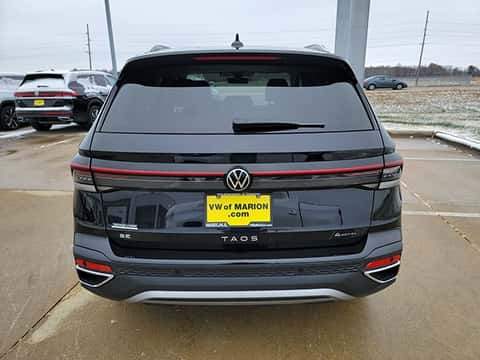
Currently, Volkswagen offers 4MOTION across several models in our inventory, though availability varies by trim level and model year. The Atlas, Atlas Cross Sport, Tiguan, Taos, and ID.4 all include 4MOTION options, and the Golf R comes standard with 4MOTION on every trim. Each brings the system’s core benefits while matching them to different vehicle sizes and purposes.
The ID.4 uses a unique dual-motor electric all-wheel drive setup rather than the Haldex-based system found in combustion models. With two motors producing 335 horsepower, the ID.4’s AWD system operates without mechanical links between axles, distributing power electronically with instant response. While the underlying technology differs from traditional 4MOTION models, the practical result remains the same: intelligent power distribution that adapts to traction needs in real time.
Not every trim level within these model lines includes 4MOTION as standard equipment. Some offer it as optional equipment, while others make it standard. When you browse our new Volkswagen models, our sales team can clarify which specific trim levels include or offer 4MOTION to help match your needs with available inventory.
Experience 4MOTION at Volkswagen of Marion
Reading about how VW 4MOTION works provides helpful context, but experiencing the system firsthand reveals its real-world value far more effectively. We invite Southern Illinois drivers to schedule a test drive in 4MOTION-equipped models to feel the difference this technology makes during acceleration, cornering, and variable traction situations.
Our woman-owned dealership takes a transparent, customer-focused approach to helping you make informed decisions (#NotLikeTheOtherGuys). Whether 4MOTION makes sense for your driving depends on your specific conditions and priorities, and we’re here to provide honest guidance.
Visit our Marion dealership at 4403 W DeYoung St, or contact our sales team at 618-249-3841 to get started today.
0 comment(s) so far on Volkswagen’s 4MOTION All-Wheel Drive Explained